
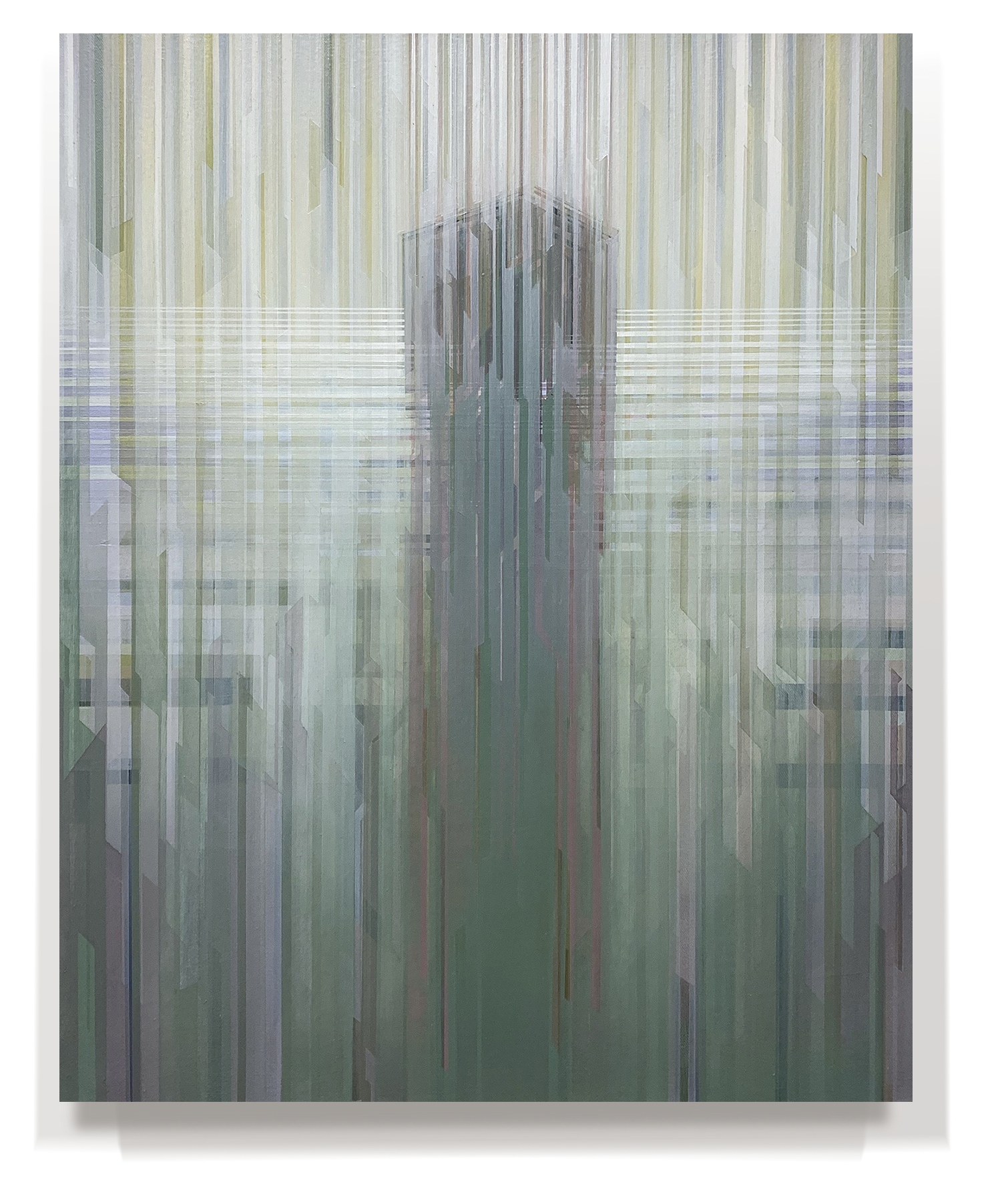
Distribution Paintings
The Distribution paintings translate social data into images. Informed by histograms and the traditions of both data representation and painterly expressionist limitations, here statistical inputs operate conceptually rather than diagrammatically, shaping the paintings without becoming illustrative.
Built through multiple thin glazes of oil, the surfaces accumulate over time, embedding uncertainty and revision into the image. Drawing on arbitrary data sets from city environments, the paintings depict the seeing of moments of strain and attenuation.
Rather than depicting social systems, the Distribution paintings translate the pressures that made them. Just as these images visually oscillate and commit to no one painterly heritage, the viewer’s perception remains unstable.
Distribution 18 is the winner of the Michael Harding Secret Coast Prize For Fine Art, 2025

Objects and Actions
These works are artefacts of the play between everyday attrition and defiance. Catapults, devices hidden under cars, life-jackets packed with sedatives and holy water, drawings made through peering into a letterbox; all are negations of civic norms that offer a stage for considering societal participation, risk, and reflection. They emphasise action over object: the gestures themselves — measured, repeated, and observed — are where meaning resides. What remains is sculpture.
Deviation from social norms is central. Each work probes thresholds of consent, curiosity, and perception, revealing the fragility of assumed boundaries. Yet these interventions carry a subtle empathy. They are never violent or coercive, but relational, inviting contemplation of how individuals engage with the unexpected, how attention and care are distributed, and how private actions ripple into public space.
By rendering process, trace, and encounter visible, these artworks are the interplay between deviance, anticipation, and human responsiveness, asking viewers to reconsider the ethics, dynamics, and assumptions of performing for one’s society.

Film Works
These films are driven by sound rather than image. They function as working responses — closer to sketchbooks or field experiments than narratives. Most arise from residencies, research periods, or specific situations, and are shaped by what is available rather than by prior intention.
Rhythm, ambience, and percussion recur throughout the works, often carrying more weight than plot or visual sequence. Fragmented or minimal narratives are used deliberately, allowing absurdity and time to decide the condition of finish.
Compared to other parts of Sandys’ practice, these films are more outward-facing and playful, while remaining structurally controlled. Locations include the Western Isles of Scotland, Nebraska, Kyoto, and New York City.
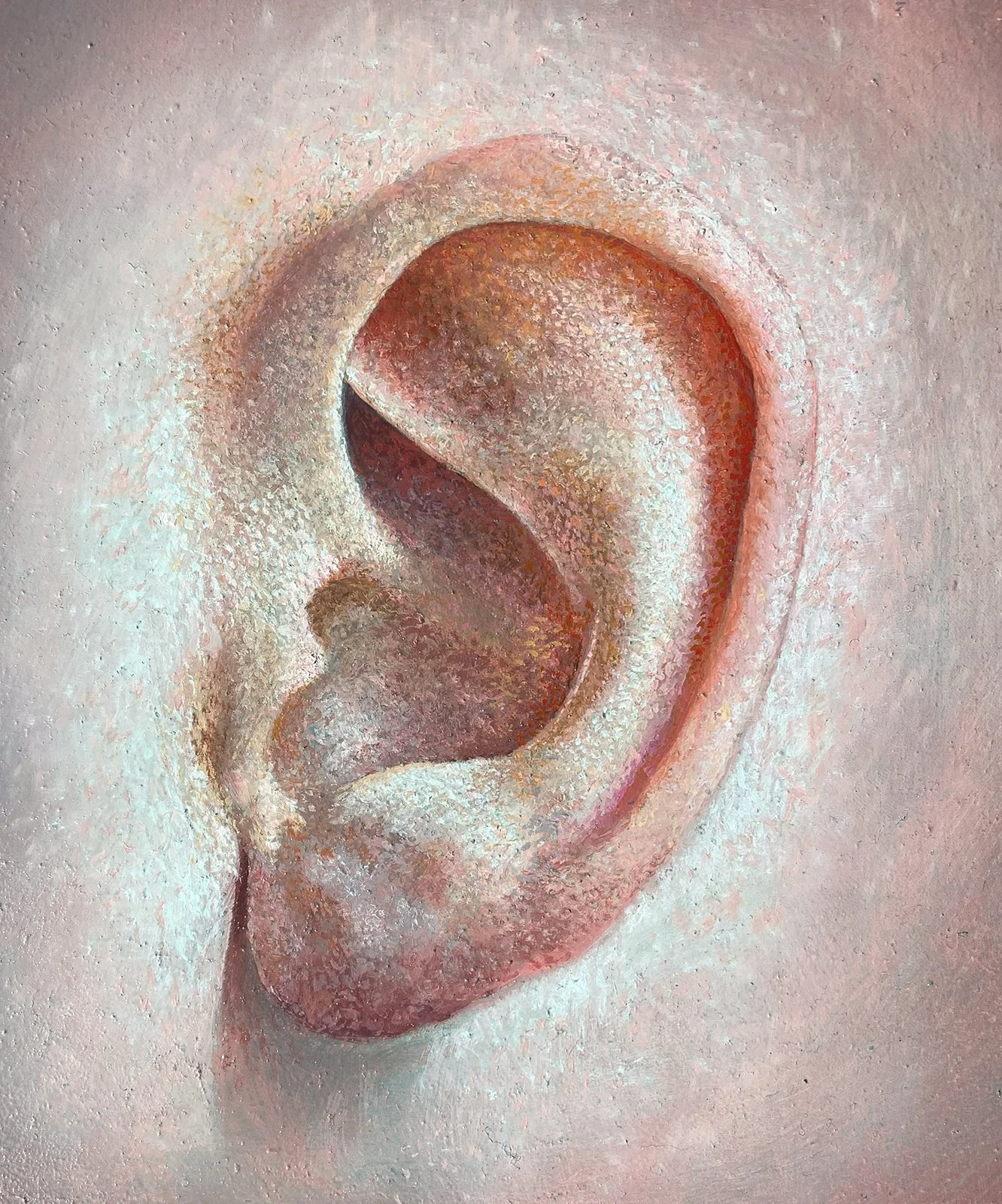
Paintings and Drawings
These works are parallel to the other strands of the practice. They are studio-based and autonomous, each responding to a specific material, visual, or conceptual problem. They are single answers to single questions. These include optical studies of refraction and sub-surface scattering, material experimentation and responses to historical strategies of image making.
While the subjects and approaches vary, the works share a common attitude: a commitment to resolution, economy, and rigour. They are not supplemental. Taken together, they reflect a constance and habitual backbone to the entire practice.